Solar Radiation Studies
Environmental Performance Simulation (EPS) | 2022
Simulation Studies | (MSSD) Carnegie Mellon University
Tools: Rhino, Grasshopper, Climate Studio & Ladybug Plugins| Type of Work: Teamwork
This study aims to systematically apply a range of analytical methods for the quantification of solar radiation effects on the exterior building surfaces and ground planes on a selected project site. Further, develop an advanced understanding of the interactive effects of building & site design (such as building orientation), external elements (such as static shading devices), and local climate on solar resources in the form of time-aggregated radiation gains for improved environmental responsiveness and awareness of local environmental/natural sources.

Axonometric view of our building case model. The highlighted gray portion is our case
study building and the blue highlighted portions are the glazing on our case study building
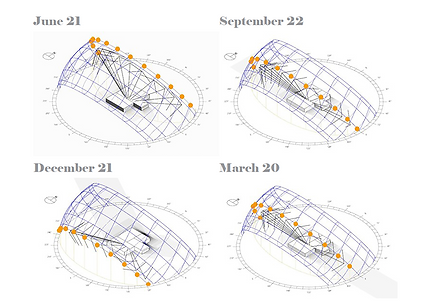
In the first section, we extracted the climate data using the grasshopper script for the building case located in Los Angeles, CA. As per the ASHRAE climate zone, LA comes under the 3B-Dry climate zone. We carried out solar performance simulations, which includes solar energy density simulations for our building case, a shading design proposal, and sun-shadow butterfly diagrams.
1. Solar Photo Voltaic Design

1st Method: Creation of a sky dome, which will show the patch with maximum radiation & locate the Angle

2nd Method : Using received solar radiation on a horizontal plane to locate the angle (Calla Dome)
2. SED I - Surface Comparisons
.png)
3. SED II - Effect of Building Orientation
.png)
4. Sun-Path Diagramming with Shadow Ranges
.png)
Report:
The attached document will provide a detailed description of the above analysis and results.