Redefining the Relationship of Humans & their Co-inhabitants through Architecture
Undergraduate Thesis | 2018
Location: Kharghar, Mumbai | Project Type: Public
Plot Area: 2,178,002 sq. ft. (50 Acres) | Built-up area - 231,962 sq. ft.
The aim of this research study was to design a space, where both humans & their co-inhabitants can interact with each other without the solid barrier of a cage, educate people about their surrounding indigenous species & ecosystem and conserve them.

Natural History Museum (Aerial View)
This aim to conserve native flora and fauna and bring humans closer to their co-inhabitants in an urban context led to the proposal of a ‘Zoological Park’. It gives shelter to all the native non-human species struggling to survive in the wildlife due to various industrial or natural issues. The park was designed in such a way as to merge the adjacent mountain ranges of ‘The Western Ghats’ and house hundreds of species native to this tropical ecosystem. It also welcomes visitors, which are immersed in natural life and not vice versa.

Site location: Kharghar, Mumbai
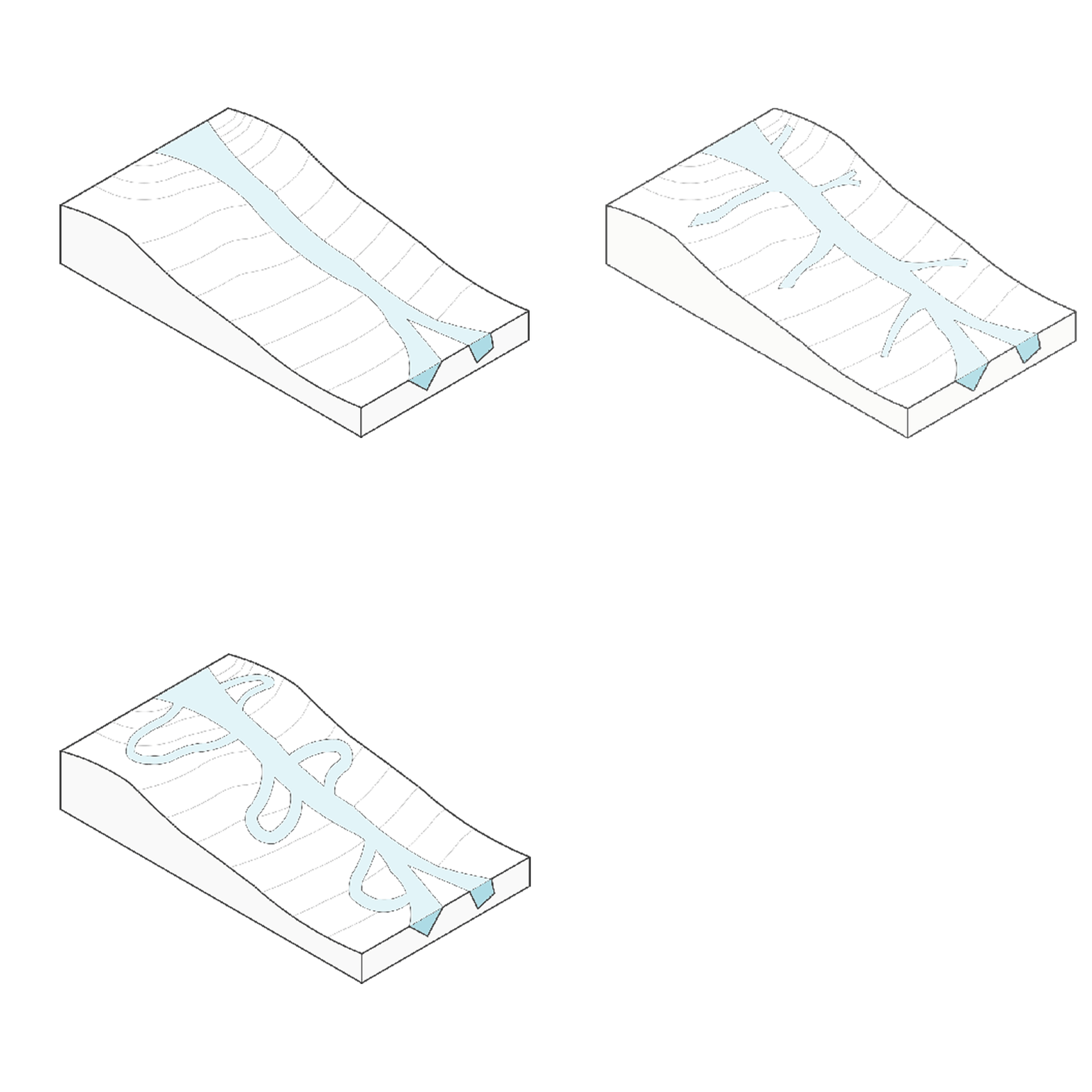
Water from the existing natural stream was diverted into loops and spread across the site
The proposal for the zoological park was based on an ‘Ex- situ conservation’ concept, which is part of the ‘Pan-situ conservation’ or ‘Hybrid conservation’ approach. Here animal enrichment is given the highest priority in a way to retain their natural behavior. So, when they are reintroduced back to the wild they can adapt to the environment.


Site Section AA'


Sustainability Strategies Used in the Project


Natural History Museum
The architectural language for each structure is inspired by the earthen architecture to merge with the surrounding mountain range. A cut & fill construction technique has been used & the excavated soil is reused as a backfill supported by counterfort retaining walls. A steel frame structural system with an extensive modular green roof has been used to make these structures. Further central courtyards and dome-shaped skylights are added for natural light & ventilation.

Construction Details of the Reatianing wall in Natural History Museum
The proposal for the zoological park was based on an ‘Ex- situ conservation’ concept, which is part of the ‘Pan-situ conservation’ or ‘Hybrid conservation’ approach. Here animal enrichment is given the highest priority in a way to retain their natural behavior. So, when they are reintroduced back to the wild they can adapt to the environment.


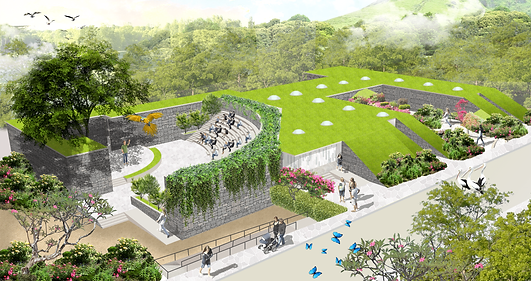

Admin Block and Entrance Pavilion (Top Left), Amphitheater and Snake House (Bottom Left),
Lookout Viewing Trail in Tiger’s (Top Right), Elephants’ Bathing Area (Bottom Right)